
Unveiling a Hidden Star of Montalcino: Stella di Campalto
In the heart of southern Tuscany, where time slows and tradition whispers through the vineyards, lies a winery that defies convention and elevates the soul of Brunello. For members of the Tuscany Uncorked Society, today we take you behind the cellar door of a truly singular estate: Stella di Campalto.
A Journey Rooted in Soul and Soil
Stella di Campalto is more than a winery—it is the embodiment of a personal journey, an act of stewardship, and a love letter to the land. In 1992, Stella di Campalto, a former philosophy student from Rome with no formal background in viticulture, took the bold step of acquiring the abandoned San Giuseppe estate in Castelnuovo dell’Abate, a subzone of Montalcino.
What followed was not just a restoration of the vineyards, but a radical rethinking of what Brunello could be when guided by intuition, purity, and deep respect for nature. By 1996, she had begun replanting the vineyards, and by 2001, Stella released her first vintage under her own name.
Biodynamics as a Way of Being
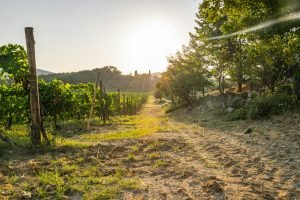
From the very beginning, Stella embraced biodynamic farming, not as a marketing tool, but as a holistic philosophy. The estate’s 6 hectares of Sangiovese are farmed in harmony with lunar cycles, cosmic rhythms, and the natural vitality of the ecosystem. No chemical treatments are used; instead, the soil is nurtured with preparations that enhance its life force.
In the cellar, the approach is equally unhurried and minimal. Fermentations take place naturally, with indigenous yeasts, in large open-top wooden vats. Each plot is vinified separately, allowing the character of every micro-parcel to express itself. The wines are aged in large Slavonian oak casks, often for longer than DOCG regulations require, and are only bottled when Stella feels the wine has reached its full narrative.
Why Stella di Campalto Is Unlike Any Other Brunello
What sets Stella di Campalto apart is not just the biodynamic certification or the hand-tended vines. It is a profound emotional clarity in the wines—bottlings that speak softly but powerfully, unfolding in the glass with haunting complexity.
Here are a few reasons why collectors and sommeliers around the world seek out her wines with almost reverent devotion:
- Micro-vinification & Micro-terroirs: The vineyards sit between 220 and 440 meters above sea level and are divided into distinct plots, each with its own soil composition and orientation. Stella vinifies these separately and, in some vintages, bottles them individually—offering a rare exploration of Brunello’s microclimates.
- Vintage-Selective Releases: Not every year yields a Brunello. Stella chooses only the vintages that truly express her vision. Some years, a Rosso di Montalcino may be elevated to near-Brunello quality, or the vintage may be skipped entirely.
- Time as a Variable: Her wines are not rushed. The aging periods often exceed those required by the Brunello di Montalcino DOCG. Some wines spend up to seven years in cask, reflecting her belief that wine must evolve at its own rhythm.
- Energetic, Emotional Wines: Many describe her wines as having an almost spiritual quality—delicate yet structured, aromatic yet grounded. They defy the “powerhouse” Brunello stereotype and instead offer transparency, grace, and longevity.
A Living Dialogue with Nature
To visit Stella di Campalto is to step into a space where wine is not manufactured but born. There are no signs pointing to the estate, no tourist tastings, no grand marketing campaigns. What you will find is a quiet, monastic reverence for the land and an unwavering commitment to truth in wine.
As members of Tuscany Uncorked Society, exploring the wines of Stella di Campalto is not just a tasting experience—it is a philosophical one. It challenges what we think we know about Sangiovese, Brunello, and the role of the vintner as translator, not manipulator.
Final Thoughts
In an era where Brunello often finds itself chasing international styles and critic scores, Stella di Campalto offers a compelling counter-narrative: a return to intuition, patience, and the raw beauty of the land. Her wines are not always easy to find, but they are always worth the search.
If you are looking to add a bottle to your cellar, be prepared to wait—and when the moment comes, let the wine speak. It always does.